Why process rheology requires full viscosity curves
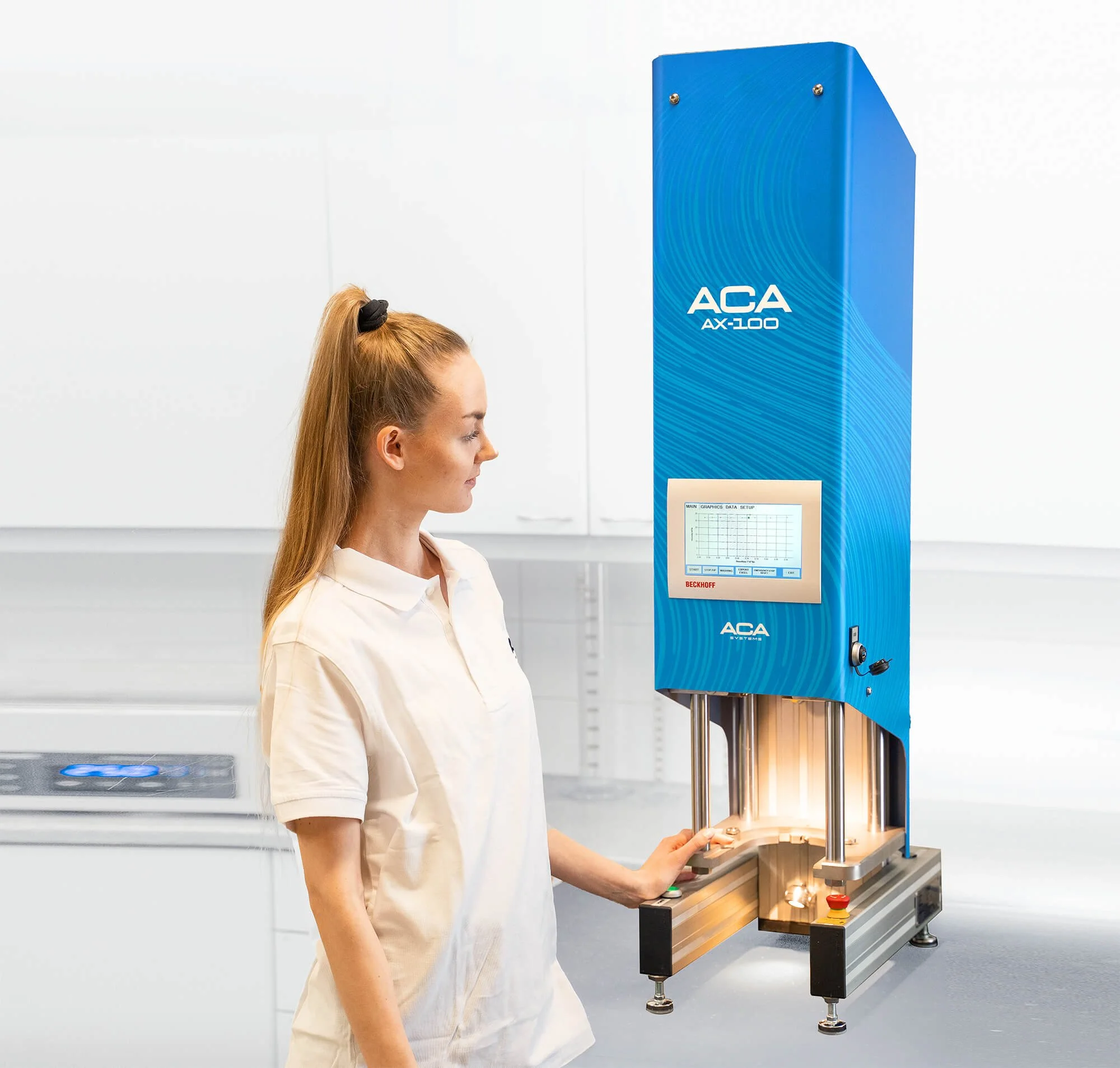
AX-100 high-shear capillary viscometer.
In many industrial processes, viscosity is still treated as a single number: a Brookfield value, a Hercules endpoint, or one “high-shear viscosity” point.
While these measurements can be useful for basic quality control, they rarely explain what actually happens in a modern high-speed industrial process.
Process rheology is never a single value — it is a curve.
Understanding that curve is becoming increasingly important as industrial processes continue to operate at higher speeds, higher solids, thinner films, tighter quality tolerances, and more sustainable formulations.
One material — many flow conditions
A coating color, starch solution, slurry, or fiber suspension experiences very different flow conditions during processing. In the tank, pumping, coating nip, film splitting, paper pores, and spraying zones, the material structure continuously changes.
A full viscosity curve can reveal:
shear thinning
shear thickening
structural breakdown
flow instability
process sensitivity
extensional effects
Why curve shape matters
Two samples may show almost identical low-shear viscosity in a Brookfield measurement, yet behave completely differently under process conditions. One may run smoothly while another may generate higher blade loading, instability, or poor runnability.
The difference is often not visible from one viscosity point. It becomes visible from the shape of the viscosity curve.

Laboratory rheology vs process rheology
Traditional rotational viscometers are valuable tools for tank viscosity, storage stability, mixing behavior, and low-shear quality control. However, many industrial coating and application processes operate far beyond the shear-rate range of conventional rotational measurements.
Modern coating and application processes may locally reach 10³-10⁶ s⁻¹. At these conditions, particle interactions change, polymer chains align, structures collapse or strengthen, and flow instabilities appear.
Reliable curves matter more than extreme shear rates
Historically, some capillary systems focused mainly on reaching the highest possible shear rates. However, at extreme flow conditions, measurements can increasingly be influenced by entrance effects, wall slip, inertial effects, transitional flow, and flow instabilities.
Modern process rheology therefore focuses on reliable curve generation, repeatability, process correlation, trending capability, and process-control suitability.
Economic benefits of process-relevant rheology
Modern coating and sizing processes operate with narrow process windows, high machine speeds, and increasing quality requirements. Under these conditions, rheology-related instability can become a major hidden cost factor.
Typical rheology-related issues include:
blade streaks
web breaks
coating defects
unstable coat weight
startup instability
If process-relevant rheology measurements help reduce rheology-related downtime by only 25%, annual savings may already reach hundreds of thousands of euros.
Example:
100 hours/year downtime × 10,000 €/hour = 1,000,000 € annual loss
25% reduction = 250,000 € annual savings
ACA Systems and process rheology
ACA Systems has worked with process-relevant rheology for decades in demanding industrial applications such as coating, surface sizing, spraying, and fiber-based processes.
Based on this philosophy, ACA Systems developed the AX-100 high-shear capillary viscometer— specifically designed for industrial process rheology.
The AX-100 combines:
one of the widest process-relevant shear-rate ranges available on the market
reliable and repeatable capillary viscosity curves
process-oriented measurement capability
advanced elongational rheology functionality
Today, the AX-100 platform is supported by more than 50 industrial installations worldwide and TAPPI standards T 582 and T 583.
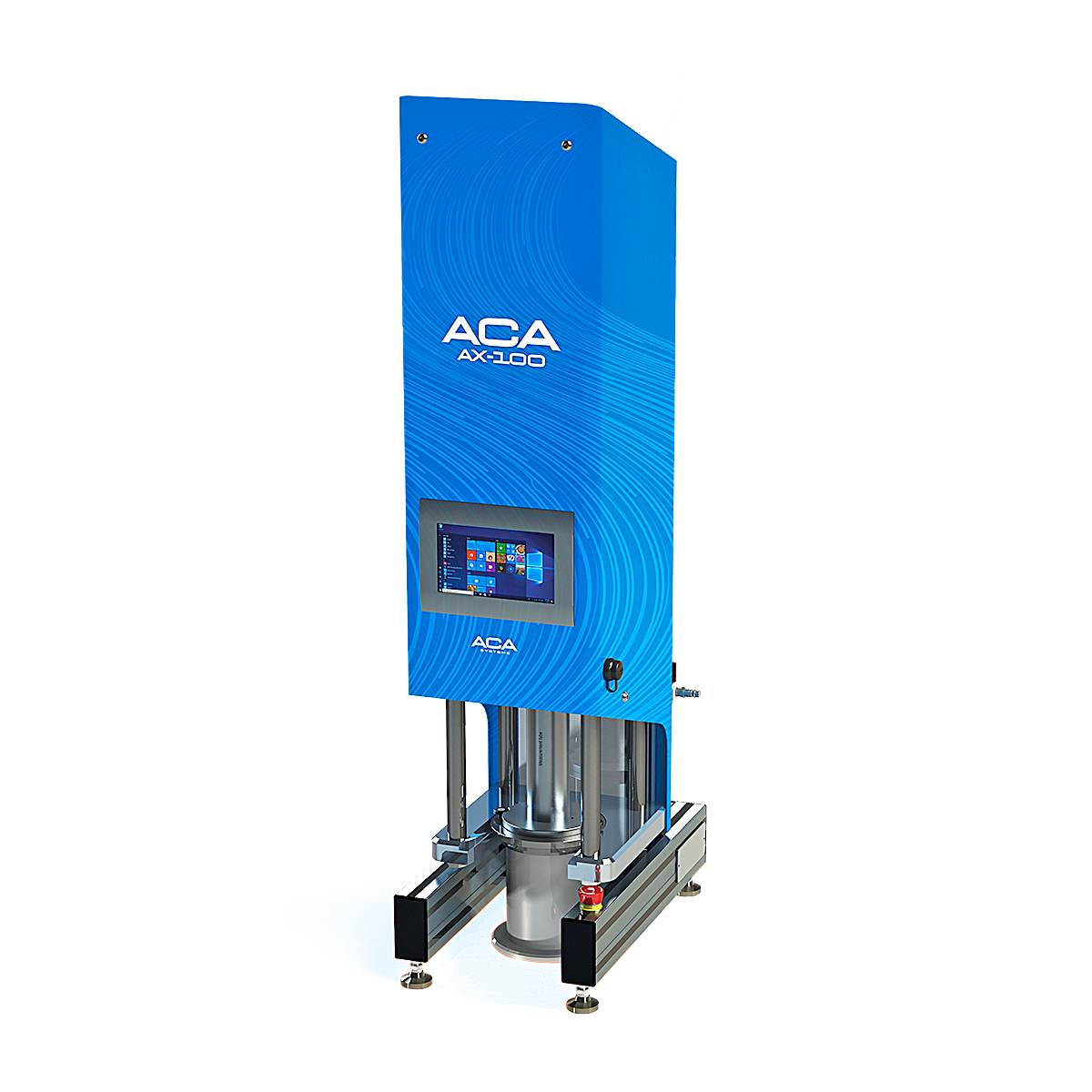
AX-100 high-shear capillary viscometer.
Looking Ahead: RheoMaTe
ACA Systems is also participating in the RheoMaTe co-innovation project together with industrial and research partners.
The project focuses on developing new rheological measurement technologies and process understanding for sustainable manufacturing and advanced biomaterials.
The objective is to bring rheological intelligence closer to real industrial production processes, enabling improved process stability, higher resource efficiency, better product quality, and smarter process control.
From single numbers to process understanding
Modern industrial processes require more than isolated viscosity values. They require reliable viscosity curves, process-relevant measurements, trending capability, and understanding of flow under real operating conditions.
The future of rheology is not simply measuring viscosity. It is understanding how materials behave in the process.
Want to understand your process rheology better?
Whether you’re optimizing coating performance, improving runnability, reducing downtime, or developing more sustainable formulations, process-relevant rheology data can provide valuable insight into real production behavior.
ACA Systems has decades of experience in industrial rheology solutions for demanding paper, board, coating, and converting applications.
Interested in discussing your process challenges or learning more about the AX-100 platform? Get in touch with our team — we’re happy to help.